Patient positioned at a slit-lamp ocular imaging device during a clinical research measurement

Advancing Ocular Surface Imaging Through Clinical Research

Peer-reviewed research on ocular surface cooling and tear film stability.

Advancing Ocular Surface Imaging Through Clinical Research

Peer-reviewed research on ocular surface cooling and tear film stability.

What Our Research Has Shown

What Our Research Has Shown

ThermOcular research has shown that ocular surface cooling can be tracked and has identified differences in cooling dynamics between dry-eye and non-dry-eye groups, providing a foundation for further clinical evaluation.

Differences in cooling rates observed between study groups

Differences in cooling rates observed between study groups

Differences in cooling rates observed between study groups

AI-assisted image processing supports quantitative analysis

AI-assisted image processing supports quantitative analysis

Regional ocular surface cooling patterns are under investigation

Regional ocular surface cooling patterns are under investigation

Key Clinical Research Findings


Box plot comparing ocular surface cooling rates (°C per unit time) between dry eye and control groups across intervals CR3 to CR8 and CRMBI; dry eye shows faster cooling

01

Measurable cooling

Ocular surface temperature changes measurably after eye opening.

02

Group differences

Exploratory research found different cooling rates in dry-eye and non-dry-eye participants.

03

Regional patterns

Cooling varies across corneal regions.

These findings support continued investigation of ocular surface cooling measurements. Further validation is needed to establish measurement performance and clinical utility.

What We Measure

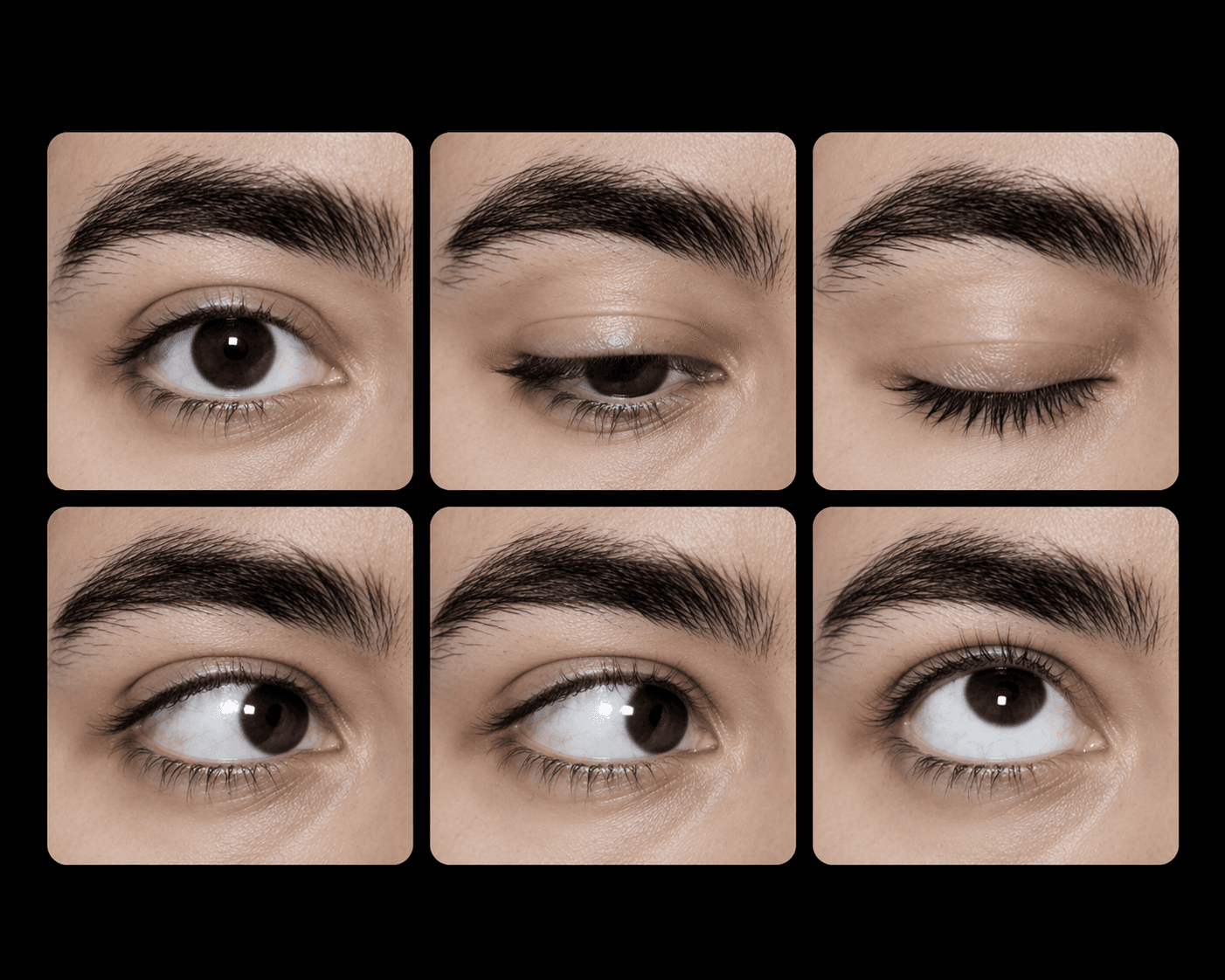
ThermOcular tracks ocular surface temperature after eye opening and calculates the cooling rate. The current five-second recording provides quantitative measurements for clinician interpretation, without automated disease classification.

 Image

Study Overview

Study Overview

Participants

120 participants tested across ThermOcular research studies (cumulative program total)

Participants

120 participants tested across ThermOcular research studies (cumulative program total)

Participants

120 participants tested across ThermOcular research studies (cumulative program total)

Protocol

Standardized measurement protocol under controlled environmental conditions

Protocol

Standardized measurement protocol under controlled environmental conditions

Protocol

Standardized measurement protocol under controlled environmental conditions

Studies

Feasibility, prospective dry-eye, and repeatability studies

Studies

Feasibility, prospective dry-eye, and repeatability studies

An initial repeatability study is complete, and reproducibility testing across devices, operators, and days is planned. The current clinic-intended recording is five seconds.

What This Means for Clinical Practice

ThermOcular is being developed to support clinician interpretation through rapid, non-contact imaging and quantitative analysis, without automated disease classification.
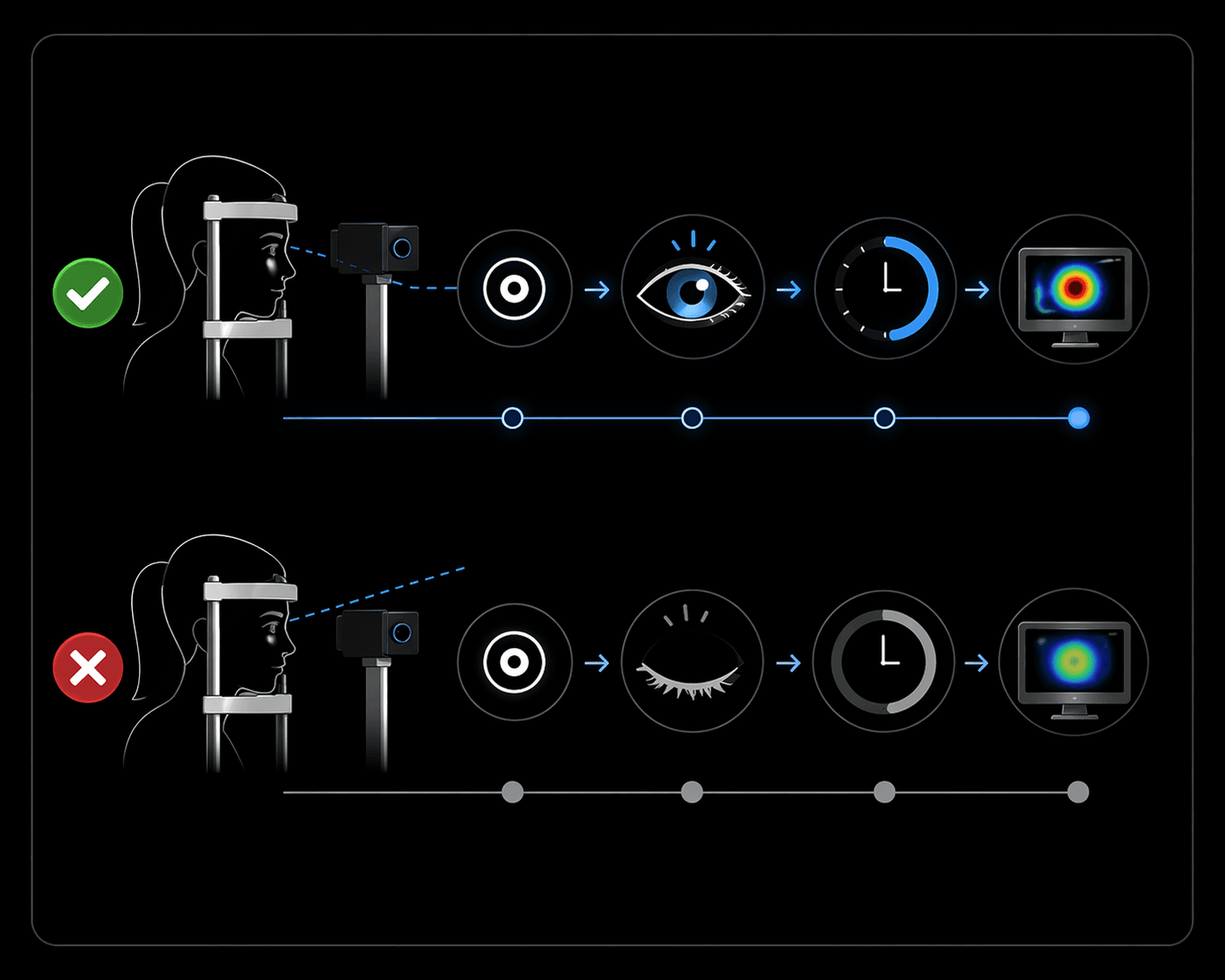
Five-second non-contact ocular surface recording

Five-second non-contact ocular surface recording

Quantitative information alongside established clinical assessments

Quantitative information alongside established clinical assessments

Designed for integration into routine eye-care workflows

Designed for integration into routine eye-care workflows

Ocular surface cooling measurements may provide eye-care professionals with additional objective information to complement established tear film and ocular surface assessments.

Scientific Publications

ThermOcular's development is supported by peer-reviewed research in ocular surface thermography, thermal–visible image processing, and ocular surface cooling dynamics.


Accepted for Publication

Post-eye-opening ocular surface temperature cooling rate as a screening measure of tear film instability: a prospective study

Eye & Contact Lens · Accepted October 2026

Eye & Contact Lens journal title graphic

Prospective research investigating the relationship between ocular surface cooling rates and tear film instability.

Published

Feasibility of the ThermOcular Dual Thermal–Visible Imaging System for Ocular Surface Temperature Measurement in Healthy Eyes

Contact Lens and Anterior Eye · August 2026

Feature Image

Demonstrated post-blink ocular surface cooling and regional temperature analysis in 25 healthy eyes.

Published

Feasibility of the ThermOcular Dual Thermal–Visible Imaging System for Ocular Surface Temperature Measurement in Healthy Eyes

Contact Lens and Anterior Eye · August 2026

Feature Image

Demonstrated post-blink ocular surface cooling and regional temperature analysis in 25 healthy eyes.

Published

Improvements in Image Registration, Segmentation, and Artifact Removal in ThermOcular Imaging System

Journal of Imaging · 2025

Feature Image

Describes improvements in thermal–visible registration, corneal segmentation, and blink-related artifact handling.

Published

Improvements in Image Registration, Segmentation, and Artifact Removal in ThermOcular Imaging System

Journal of Imaging · 2025

Feature Image

Describes improvements in thermal–visible registration, corneal segmentation, and blink-related artifact handling.

Published

A Novel System for Ocular Surface Temperature Measurement and Tracking

IEEE Access · 2023

Feature Image

First synchronized dual-camera system for automated corneal temperature measurement and tracking

Published

A Novel System for Ocular Surface Temperature Measurement and Tracking

IEEE Access · 2023

Feature Image

First synchronized dual-camera system for automated corneal temperature measurement and tracking

Additional Publications and Intellectual Property

Cooling rate dynamics as a diagnostic indicator for dry eye disease: a comparative thermographic analysis

Presented at NCC 2026, BCLA Scientific Stream (Veldhoven, March 2026) · Contact Lens and Anterior Eye, October 2026

Effect of regional variations in corneal surface cooling for dry eye disease diagnosis

Presented at NCC 2026, BCLA Scientific Stream (Veldhoven, March 2026) · Contact Lens and Anterior Eye, October 2026

Feasibility of the ThermOcular dual thermal-visible imaging system for ocular surface temperature measurement in healthy eyes

Presented at NCC 2026, BCLA Scientific Stream (Veldhoven, March 2026) · Contact Lens and Anterior Eye, October 2026

AI-powered IR–visible dual-camera system for measuring and tracking ocular surface temperature

Conference abstract · Acta Ophthalmologica · 2024

Toward precision in ocular surface temperature measurement: improvements in image segmentation

Technical publication · Journal of Computational Vision and Imaging Systems · 2023

A computational thermal-visual imaging system for automatic cornea temperature tracking

Technical publication · Journal of Computational Vision and Imaging Systems · 2022

System and method for imaging, segmentation, temporal and spatial tracking, and analysis of visible and infrared images of ocular surface and eye adnexa

Patent pending (US and Canada) · US20210321876A1 · CA3116492A1